


FRANCESCO DE TATTI
Varese, 1480 ca. – 1530 ca.
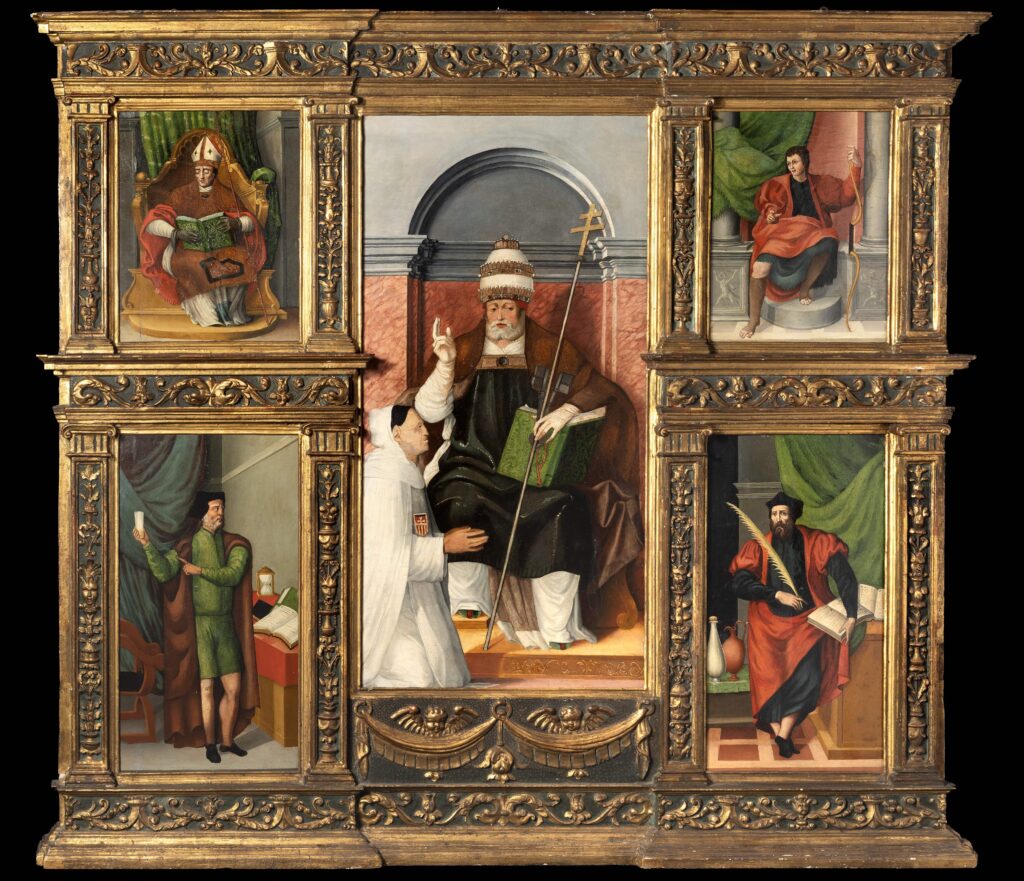
Polyptych with Saint Peter in the chair among the Saints Cosmas, Damian, Sebastian and a Holy Bishop
oil on panel, cm. 164×180
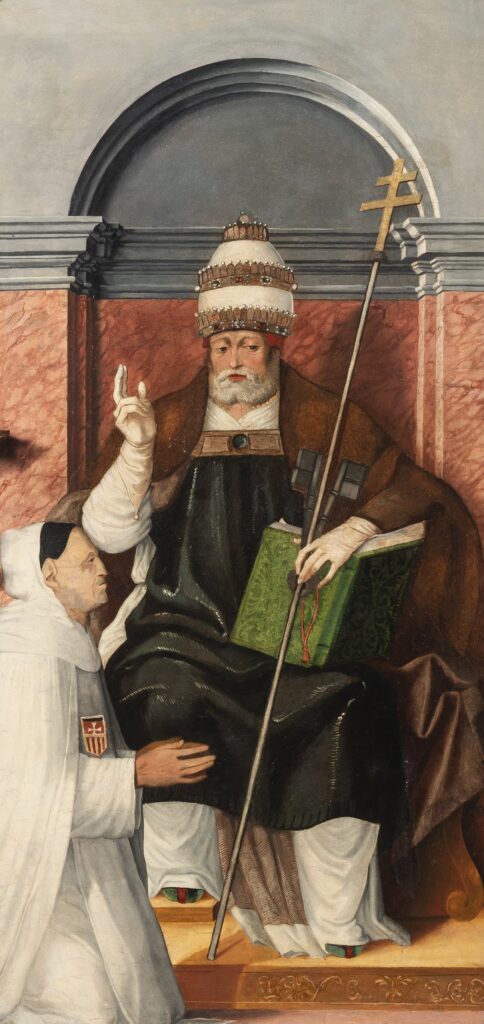
This painting is a rare 16th-century polyptych that has survived intact, retaining its original monumental frame and thus preserving its earliest appearance. The central panel, which rises higher than the flanking sections, forms the focal point of the composition and depicts Saint Peter enthroned, his right hand raised in blessing. The saint is shown frontally, vested in papal robes and wearing the tiara, while holding the Keys of the Kingdom and an open book. At his feet, kneeling in devotion, appears the figure of a worshipper or, more probably, the donor who commissioned the work, his garment adorned with a coat of arms that appears to belong to the Order of the Blessed Virgin Mary of Mercy (the Mercedarian Order). This heraldic device may provide further clues regarding the circumstances of the commission and the original context for which the work was created.
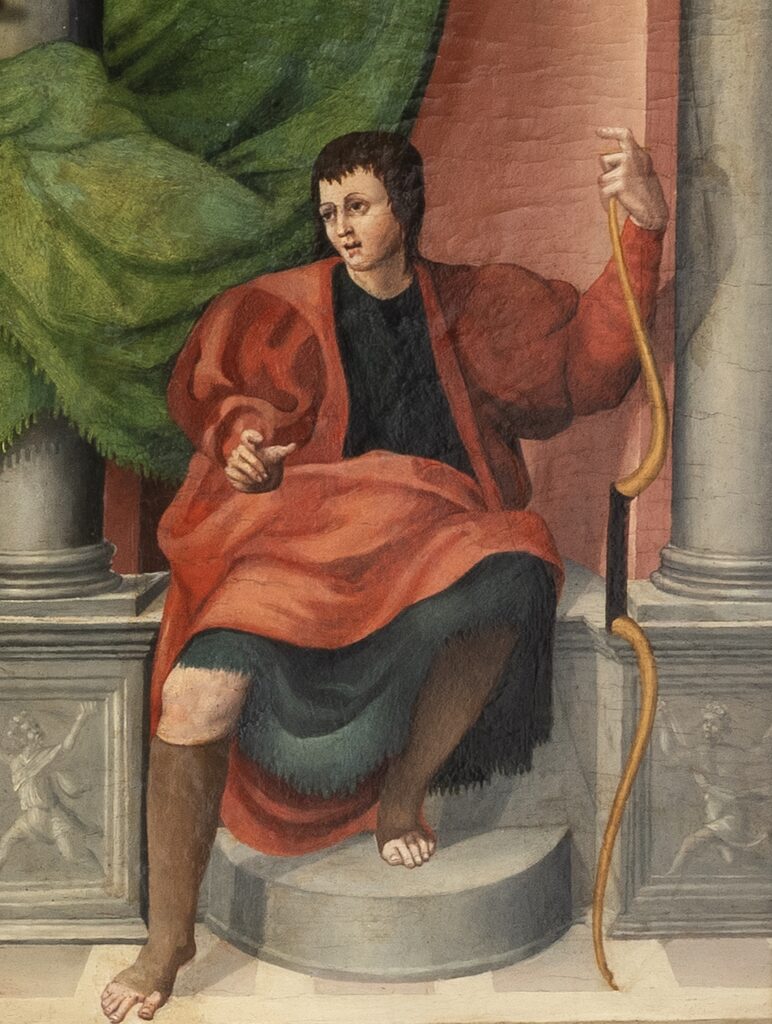
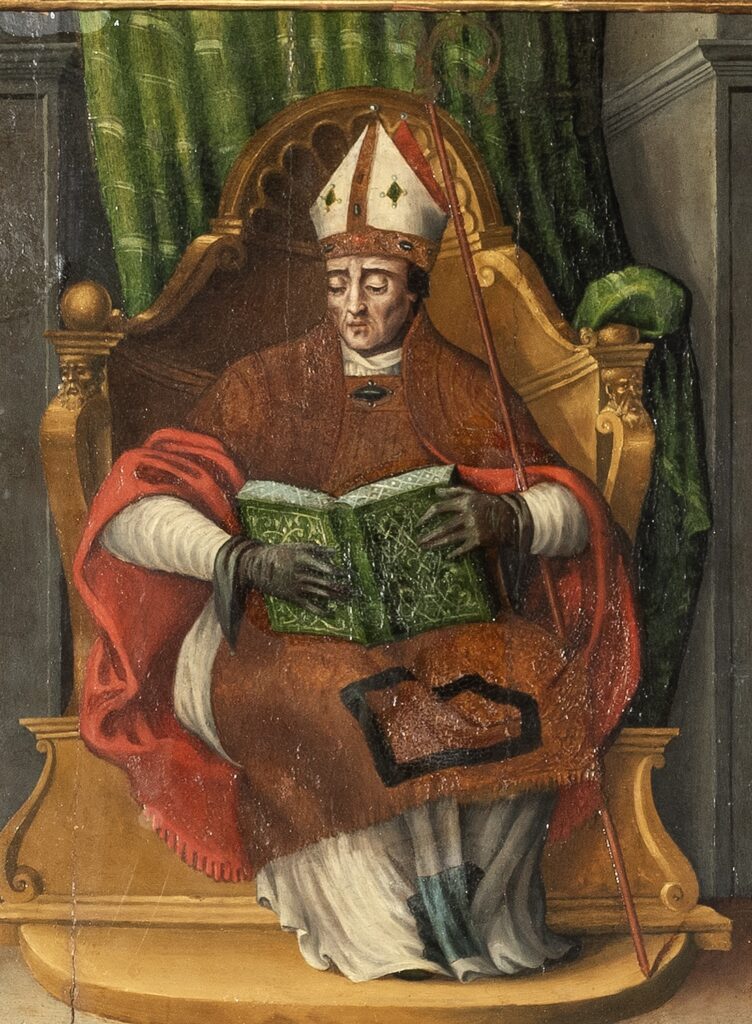
On the upper tier of the side panels, the figure to the left is a bishop saint, likewise enthroned, perhaps one of the Fathers of the Church. However, the identification of this figure remains uncertain, lacking clear iconographic attributes. To the right stands a soldier with a large bow prominently displayed in the foreground, readily identifiable as Saint Sebastian.
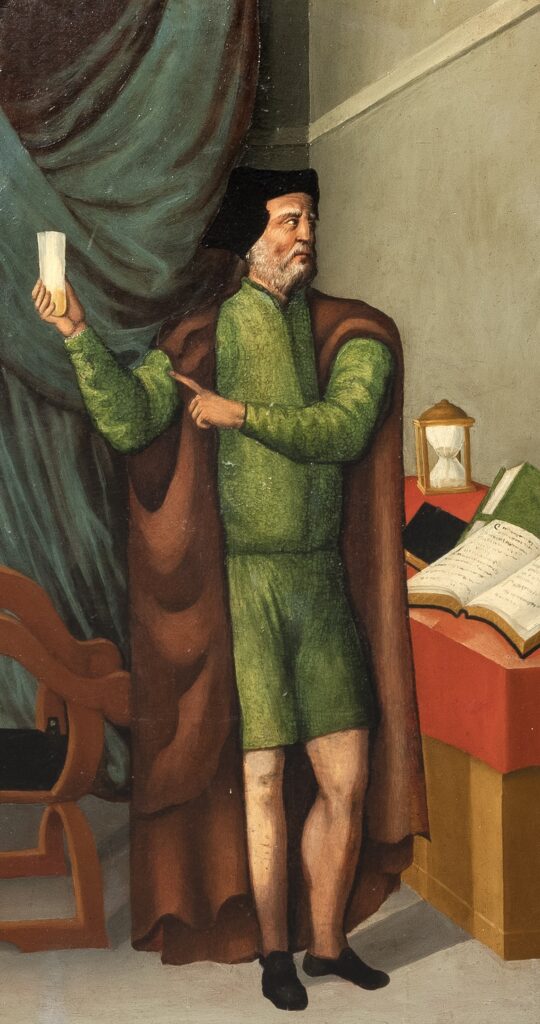
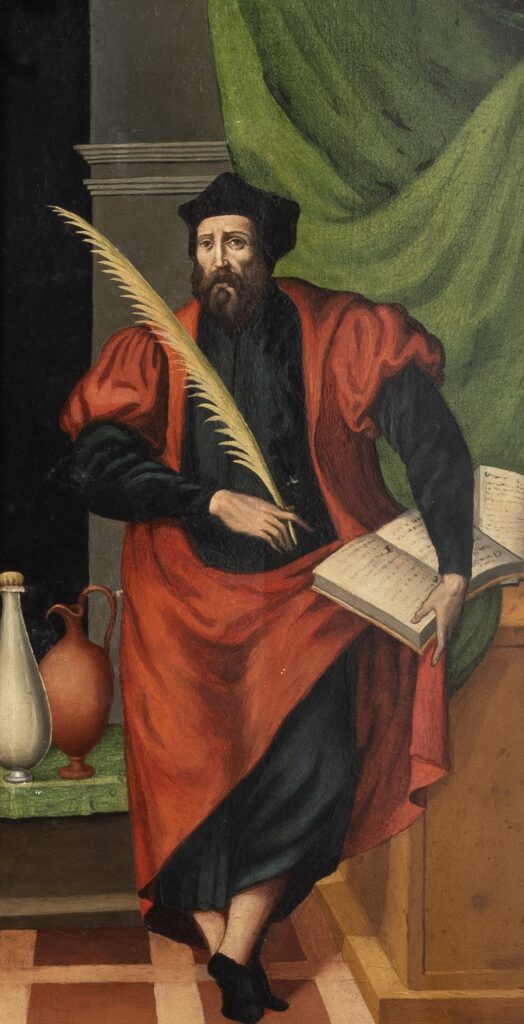
In the lower register, the two saints dressed in the contemporary fashion of the period are depicted within interior settings furnished with flasks, vessels, and jugs. They are most likely Saints Cosmas and Damian, the patron saints of medicine, who are almost invariably represented together.
The style belongs to the Lombard painting of the early 16th century, poised between the Leonardesque tradition – particularly the influence of Bernardino Luini – and the innovative artistic language of Gaudenzio Ferrari. The painting appears to fit perfectly within this artistic milieu and suggests the hand of Francesco de Tatti, the highly active painter from Varese who worked throughout the Ticino region, around Lake Como, and in Milan until the early 1530s.
Comparisons with his mature polyptychs, such as the example from Bosto now at the Castello Sforzesco in Milan, as well as with the predella of the Brunello altarpiece, strongly support the possibility that this work may represent one of the artist’s latest creations.