


MASTER FROM THE 17TH CENTURY
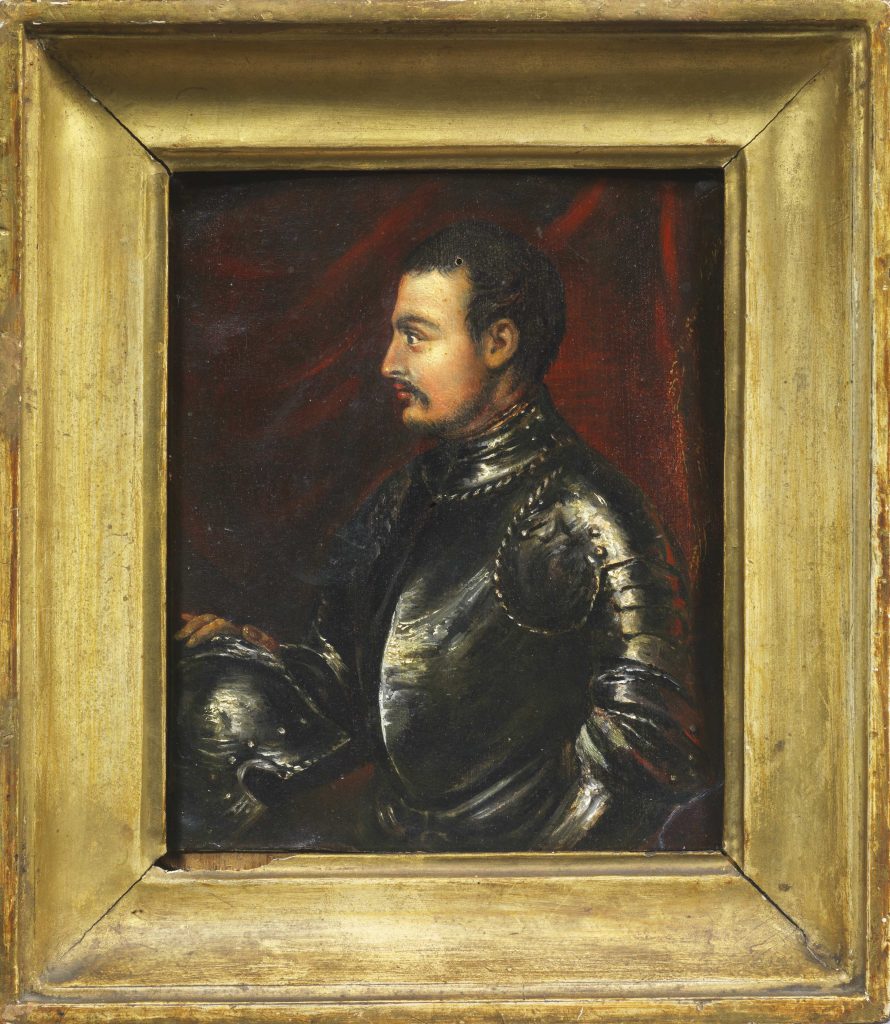
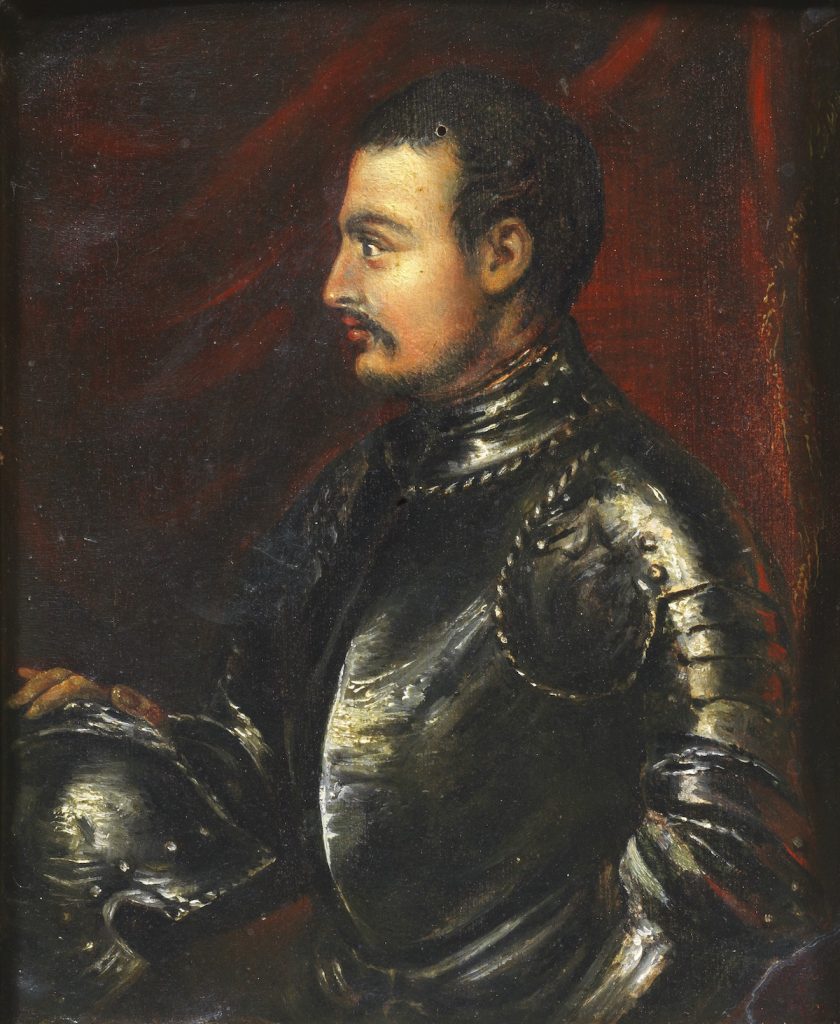
Giovanni delle Bande Nere
oil on paper applied on wood panel, cm 20×16
Among the few members of the Medici family whose name is associated with arms, rather than with art and culture, Giovanni (1498-1526) belonged to a cadet branch of the House. This particular lineage, known as “Popolano” or “Trebbio”, descended from Lorenzo il Vecchio, and would be in power from the accession to the throne of his son Cosimo I, after the assassination of Alessandro, the first duke of Florence, until the extinction of the dynasty in 1737, with the death of the last grand-duke, Gian Gastone. A celebrated man-at-arms, on 25 November 1526 Giovanni was wounded in a battle near Mantua (Governolo), in an attempt ot halt the advance of Emperor Charles V in the months preceding the Sack of Rome in 1527. The severity of the wound – caused by a falconet shot that shattered the thighbone of his right leg – and the delay in receiving aid rendered the amputation of the limb futile; Giovanni died, probably of septicaemia, on the night between 29 and 30 november 1526.
The painting presented here, of small format, depicts the ‘Condottiero’ in profile wearing an armour, a pose that finds its prototype in the canvas executed in 1545 by the Venetian painter Gian Paolo Pace, also known as L’Olmo (doc. 1528-1560), a work which, thanks to Vasari’s “Lives”, we know was given to Cosimo I by Pietro Aretino (Gallerie degli Uffizi, inv. 1890, n. 934). Our example is characterized by a rapid and immediate handling, akin to that of a sketch. Although the oil-on-paper technique employed here is consistent with a preparatory function, it is more likely that this work is a practice exercise or a recollection executed after Pace’s painting, probably dating to the Baroque period.