


FRANCESCO ALBANI
Bologna, 1578-1660
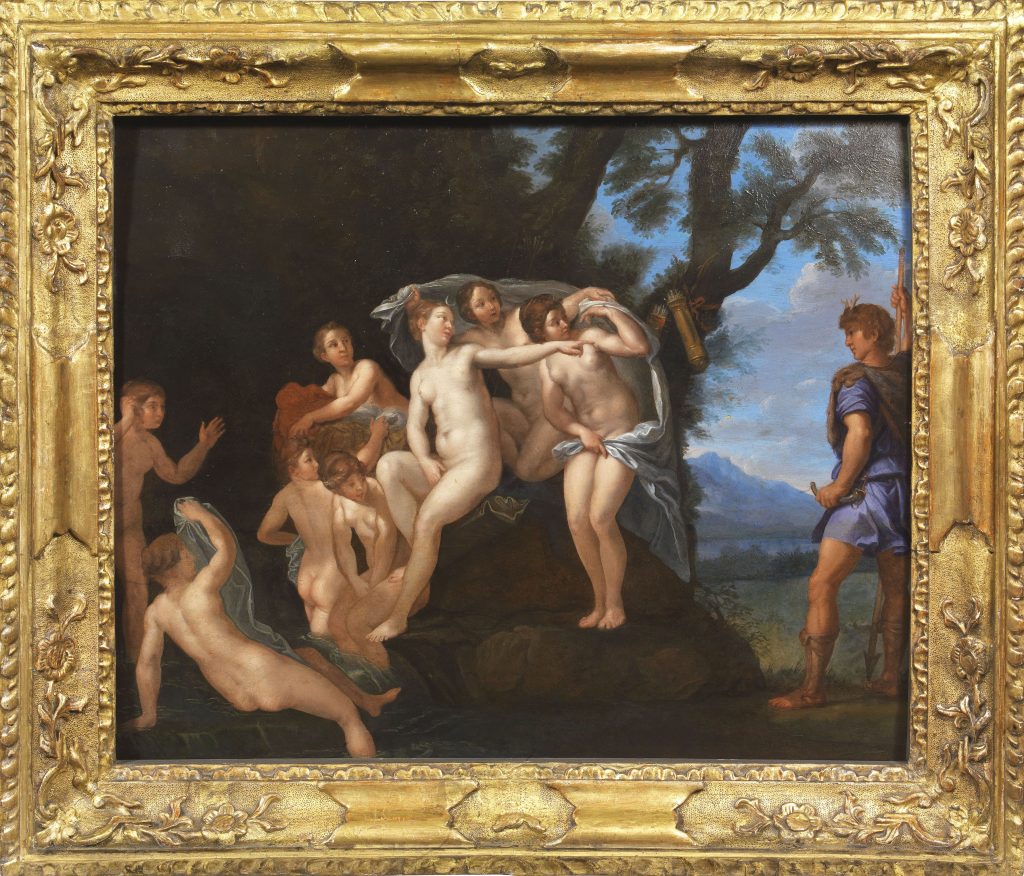
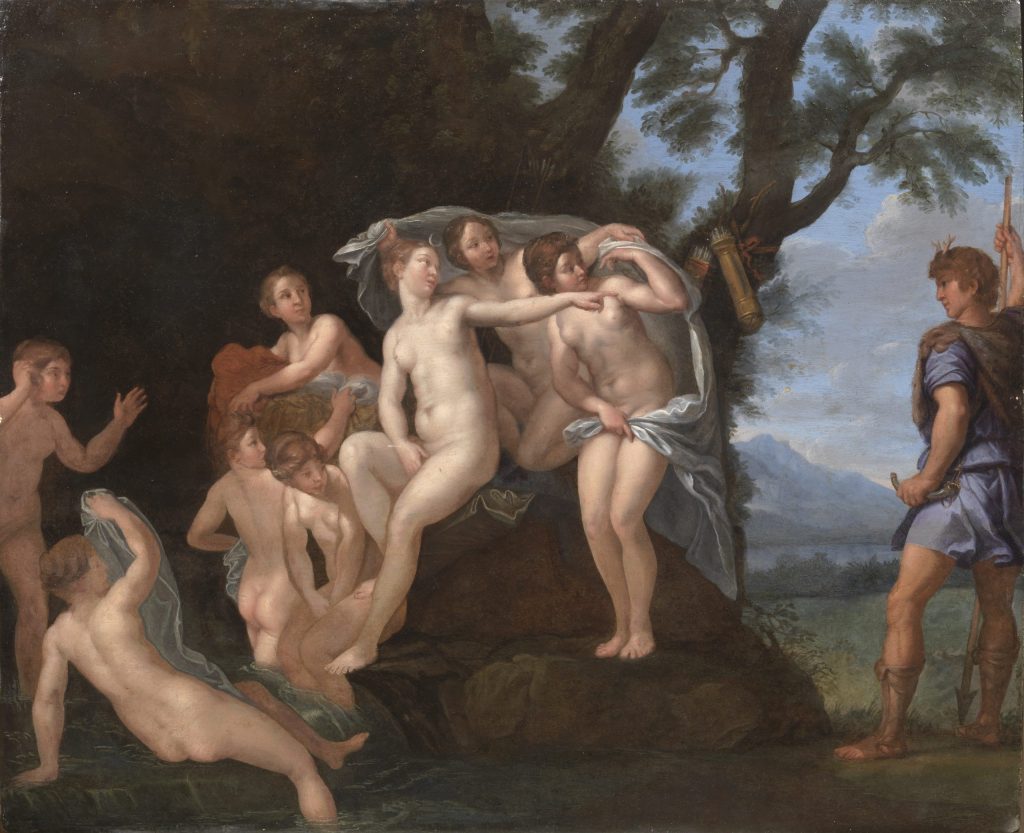
Diana and the nymphs startled by Actaeon
dated: 1610 ca.
oil on panel, cm 51,7×62,5
The panel depicts the episode recounted in the Metamorphoses by Ovid (III, 138–252), in which the young hunter Actaeon accidentally surprises the goddess Diana as she bathes with her retinue of nymphs at a woodland spring. The unexpected sight of the mortal provokes the goddess’s immediate reaction: as punishment she transforms him into a stag, and, unable to recognize their master in his new form, his own hounds will ultimately pursue and tear him to pieces.
Because of its intrinsic lyrical qualities and its natural affinity with a classicizing interpretation, the subject was treated several times by Francesco Albani, with iconographic variations of differing extent. The present version finds a close comparison with the composition executed on copper (52 × 61,5 cm), now preserved at the Musée du Louvre in Paris. In relation to that work, however, the composition displays certain variations in the draperies and in the conception of the landscape, as well as evident pentimenti made during the execution, particularly visible in the two nymphs at the lower left.
The high quality of the painterly handling does not suggest any significant intervention by the workshop; rather, the different conception of the landscape – here defined by a clearer and more diffused light, consistent with a fully classicizing sensibility – points to a distinct redaction of the same invention by the artist himself.
The panel, considered autograph, thus reiterates one of Albani’s most successful inventions. Among the leading protagonists of Bolognese painting of his generation, the artist – together with Annibale Carracci and later Guido Reni and Domenichino – played a decisive role in the definition and dissemination of a refined classicizing pictorial culture that developed between Bologna, his native city, and Rome.