

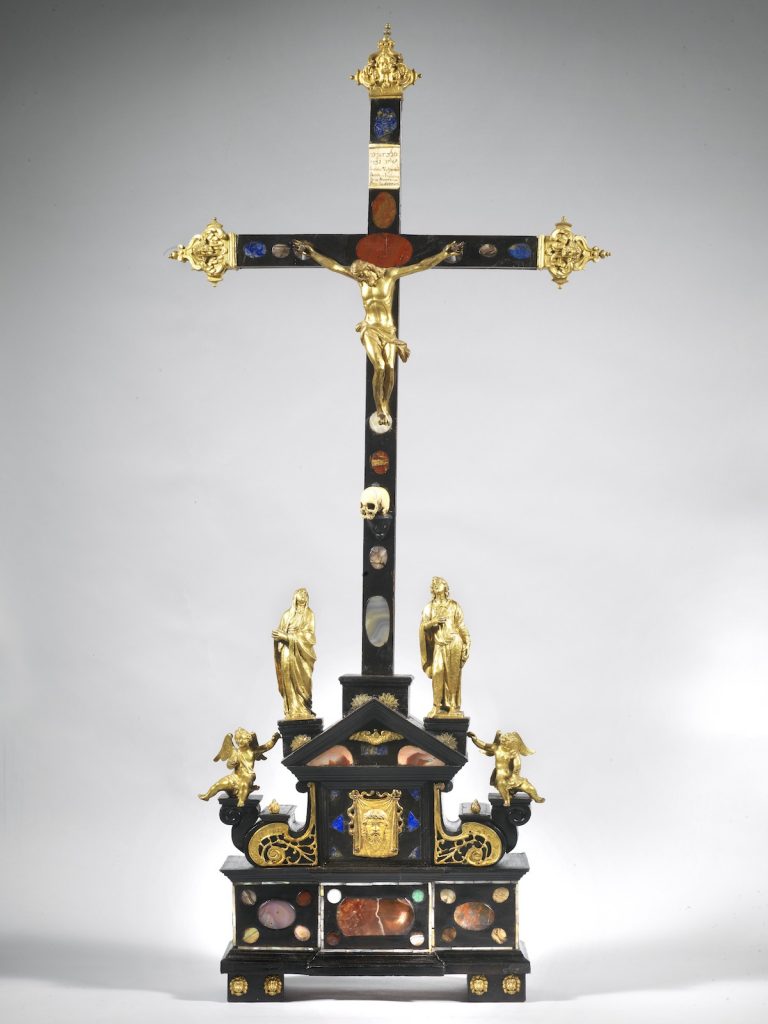
TABLE CROSS
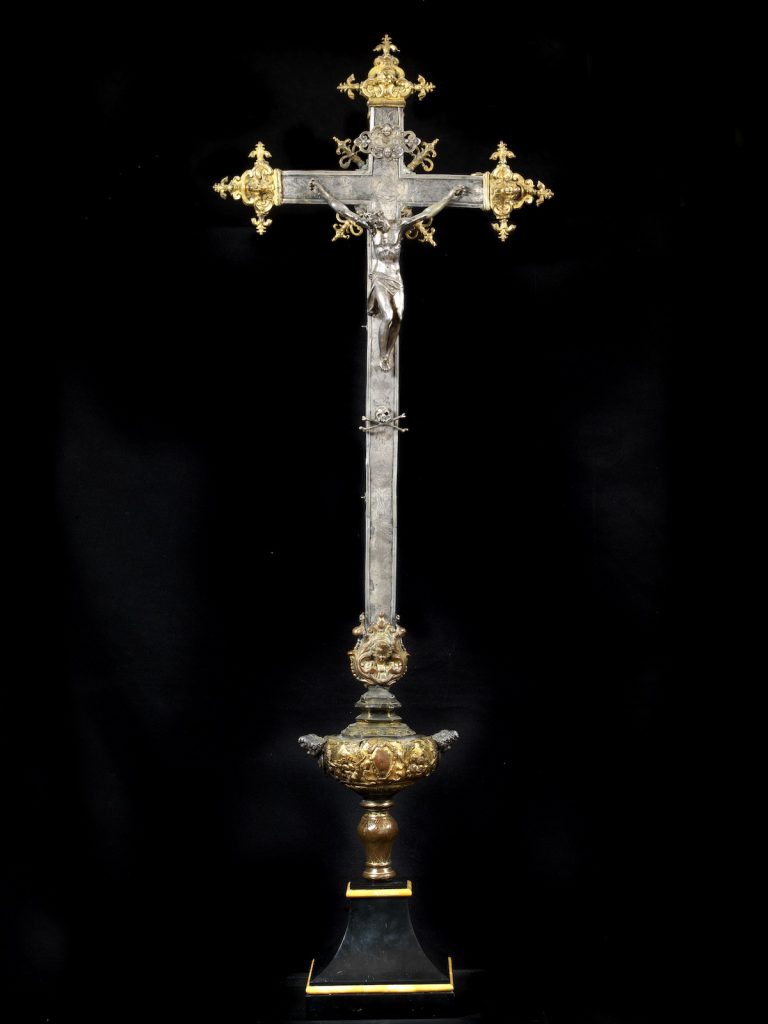
ebony wood, semiprecious stone inlays with gilded bronze parts
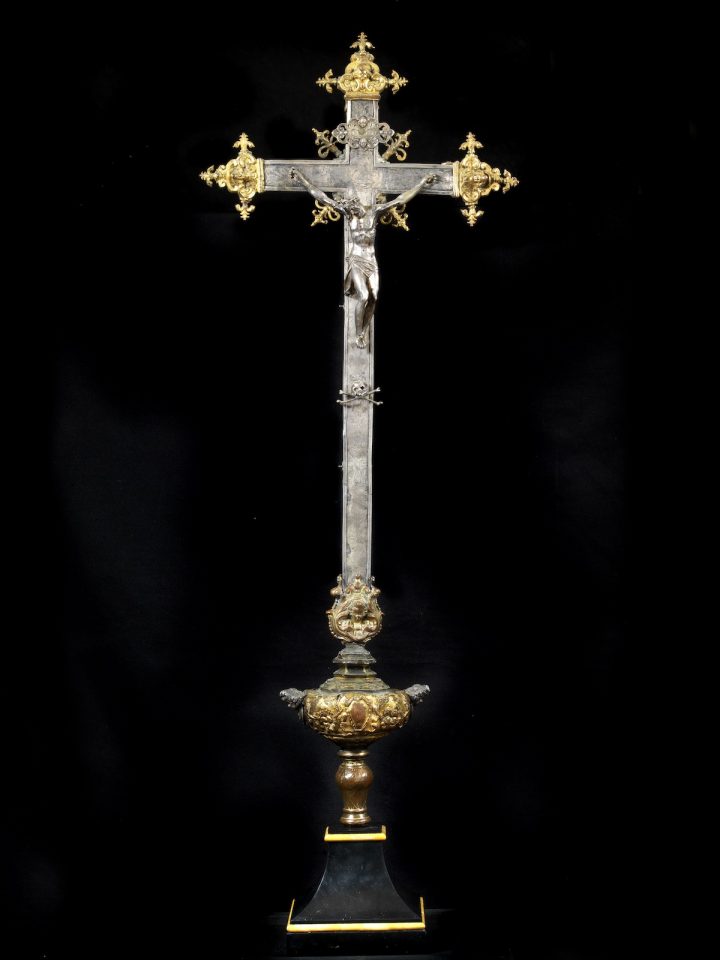
The altar crucifix depicted is an important liturgical furnishing of Florentine manufacture, datable to the early seventeenth century. It is made from a refined combination of precious materials and enriched with hardstone inlays. At the center of the composition is the figure of Jesus Christ crucified, cast in gilded bronze with elegant, elongated proportions. The inclined head and the perizoma rendered with soft, flowing folds recall an iconographic type widely found in sacred art between the Renaissance and the early Baroque.
The work is composed of an articulated architectural base, conceived as a miniature altar. The central section, surmounted by a pediment and connected to the lower lateral elements by scroll volutes, supports the cross itself. The structure is enriched with inset hardstone panels and numerous gilded bronze decorative elements, including a Veronica with the effigy of Christ’s face, the dove of the Holy Spirit, and small antique-style lion heads.
The cross, made of ebonized wood and embellished with hardstone inlays arranged along the arms and the vertical shaft, features elegant gilded terminals in a Mannerist taste, decorated with cherub heads. Above Christ’s head is the traditional titulus bearing the inscription INRI in the three canonical languages — Hebrew, Greek, and Latin — while beneath his feet appears a small skull, symbol of Golgotha and of redemption through the Cross.
The crucified Christ is mourned by fully modeled gilded bronze figures representing the Virgin Mary and Saint John the Evangelist, traditionally shown at the foot of the cross in the scene of the Crucifixion, accompanied by a pair of kneeling angels.
Florence, early 17th century
cm 107 height