


Venetian painter
19th century
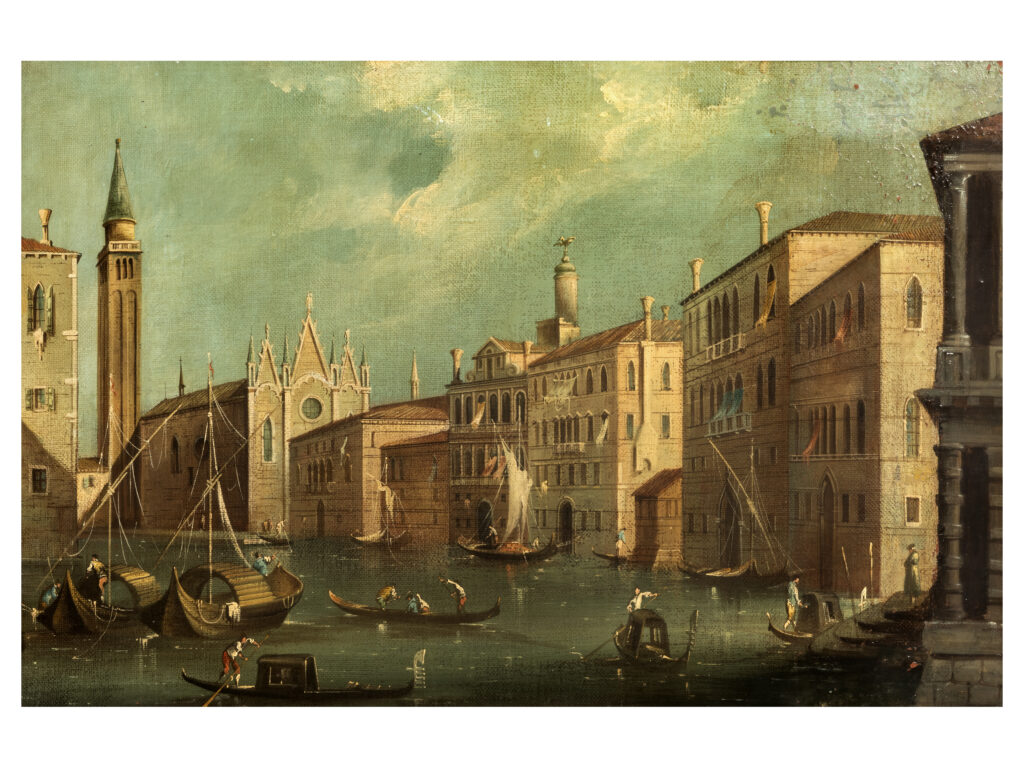
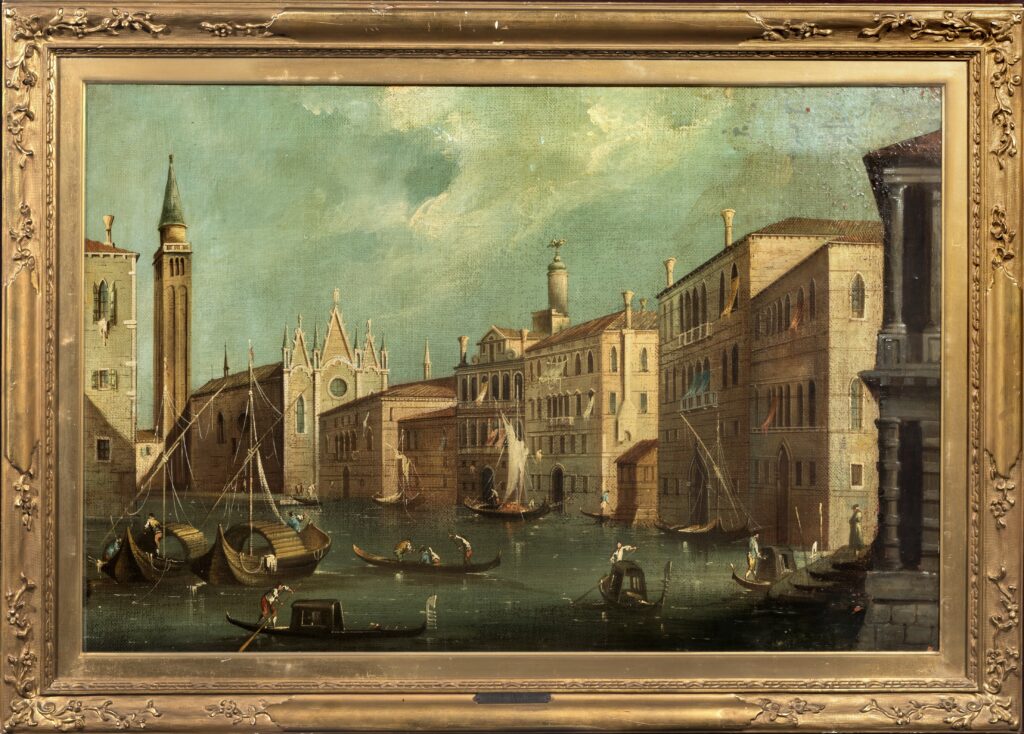
View of Venice with the Church of Santa Maria della Carità
oil on canvas, 59,5×89,5
The painting depicts an idealised view of the Grand Canal, animated by gondolas and other vessels gliding across the water before a picturesque succession of civic and religious buildings. At the centre of the composition stands the church of Santa Maria della Carità, recognisable by its distinctive Gothic façade and large rose window, flanked by its ancient bell tower, which collapsed in 1744. The inclusion of the latter, which had disappeared more than a century before the probable execution of the painting, reveals the historicising and evocative character of the representation.
From a stylistic perspective, the work may be associated with the 19th-century Venetian School and belongs to the enduring tradition of Venetian view painting inaugurated in the 18th century by Canaletto. The subject reprises one of the city’s most celebrated prospects, depicted on several occasions by the Venetian master, recalling his compositional approach, atmospheric luminosity, and keen interest in architectural description.
The view, however, displays certain inconsistencies when compared with the actual configuration of the Grand Canal. The arrangement of the buildings does not correspond precisely to Venetian topography, while a number of uncertainties in proportion and perspectival construction can be observed. Such elements depart from the rigorous spatial control characteristic of Canaletto’s works and suggest the hand of a later follower or of an artist engaged in the production of views inspired by 18th-century models.
It is therefore plausible that the painting was intended for the international tourist market, serving as a refined souvenir for the growing number of foreign travellers who visited Venice throughout the 19th century. Such works catered to the demand for evocative images of the city, privileging an idealised and nostalgic vision of Venice over strict topographical accuracy.