

19th-CENTURY NEOCLASSICAL SCULPTOR
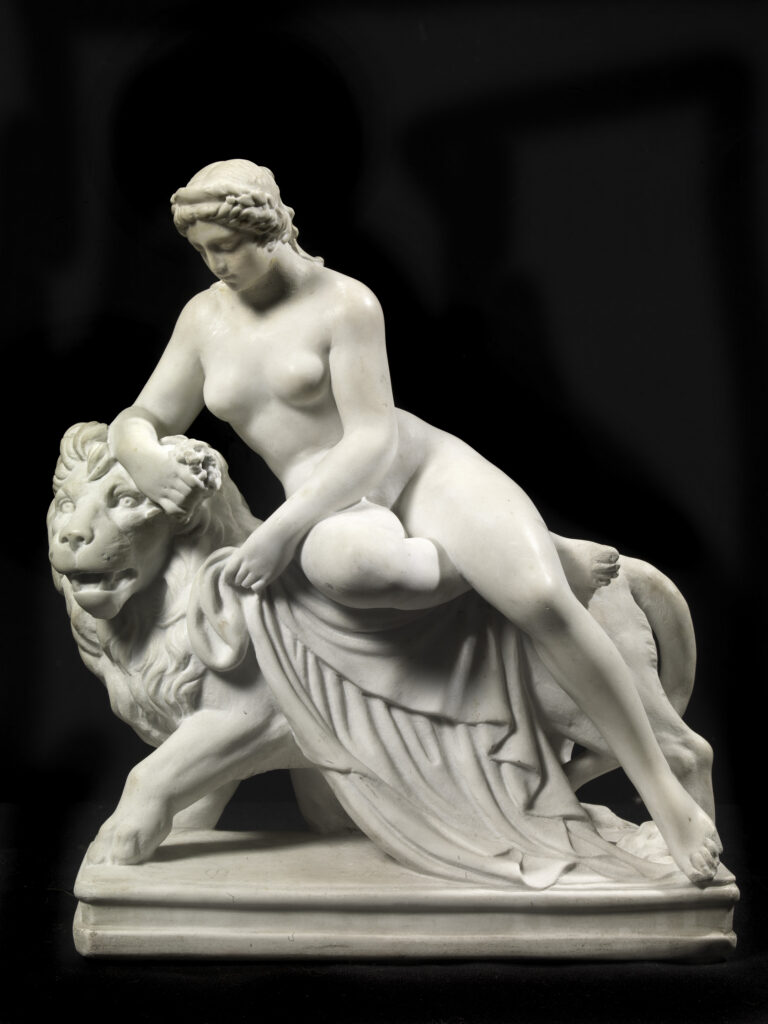
Diana watching the sleeping Endymion
alabaster, cm. 110x51x38
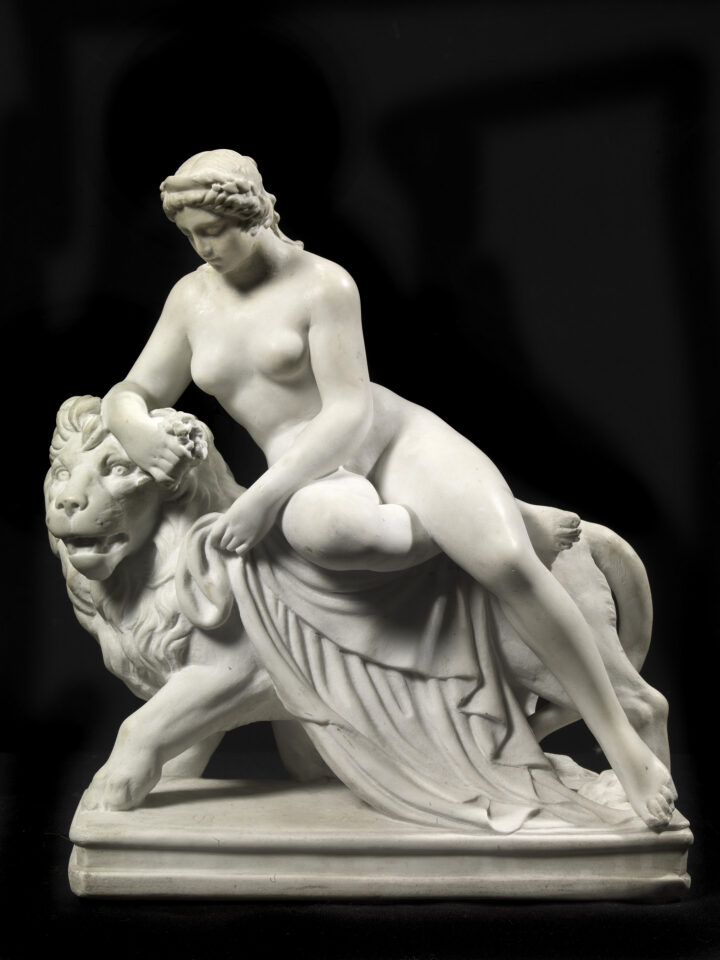
The female alabaster sculpture we present perfectly embodies the principles of Neoclassicism: it depicts the goddess Diana contemplating the sleeping Endymion, inspired by the famous sculpture preserved in the Vatican Museums.
According to the most widespread version of the myth, narrated differently in classical sources, Diana had fallen in love with a handsome shepherd, Endymion, after seeing him asleep in a cave on Mount Latmos, where the young man grazed his flocks. It was thus that she asked Jupiter to plunge the shepherd into an eternal sleep, so that she could contemplate him every night, visiting him in the guise of a lunar deity.
Diana is portrayed here standing, her body is enveloped in a delicate peplos that reveals her sinuous forms through a play of transparencies. The pose, elegant and composed, is made dynamic by the light movement of the dress, as if stirred by a light breeze, and by the twist of the head. The face, serene and idealized, expresses a sense of contemplation, with the gaze turned downwards, adding a touch of mystery to the figure.
This sculpture is an excellent example of the timeless, classical elegance that fascinated collectors of the time, and it represents a perfect combination of technical perfection and the expression of ideal values that characterized Neoclassicism.
In the Neoclassical era, sculpture assumed a leading role, considered the pinnacle of artistic expression capable of embodying the ideal of beauty of antiquity. The revival of classical models had a profound impact, especially in academic teaching, where copying ancient sculptures became a fundamental practice.