


FEDELE FISCHETTI
Naples, 1732 – 1792
Allegories with putti
oil on panel, cm. 23×31
This pictorial cycle, comprising four delicate panels of southern Italian origin datable to the mid-18th century, represents an emblematic example of high-quality decorative painting, now attributed to the late Baroque Neapolitan painter Fedele Fischetti. It is generally thought that these wooden elements originally formed part of an ornate furnishing ensemble, most probably a cabinet, sedan chair or carriage, as the gold ground would seem to suggest – a feature found in Neapolitan works of the period of similar function by Fischetti himself, which display a pronounced decorative sensibility.
The imagery unfolds through a refined interplay of allegories, in which groups of putti convey moral and philosophical ideas. Within this decorative programme, the first panel, plausibly dedicated to Wisdom or Mathematics, depicts a putto consulting an open book beside a set square, thereby alluding to rational knowledge as the force that orders the world. This is followed by a possible allegory of Power and Prosperity, in which the infant figure reaches towards a throne accompanied by a cornucopia overflowing with fruit, symbolising abundance derived from enlightened authority.
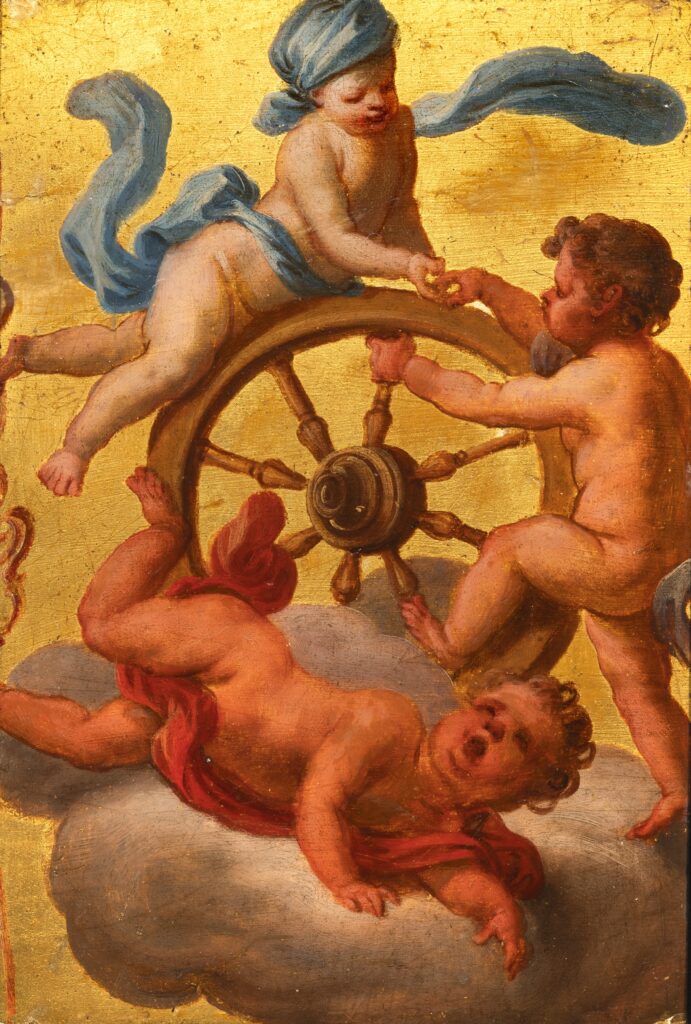
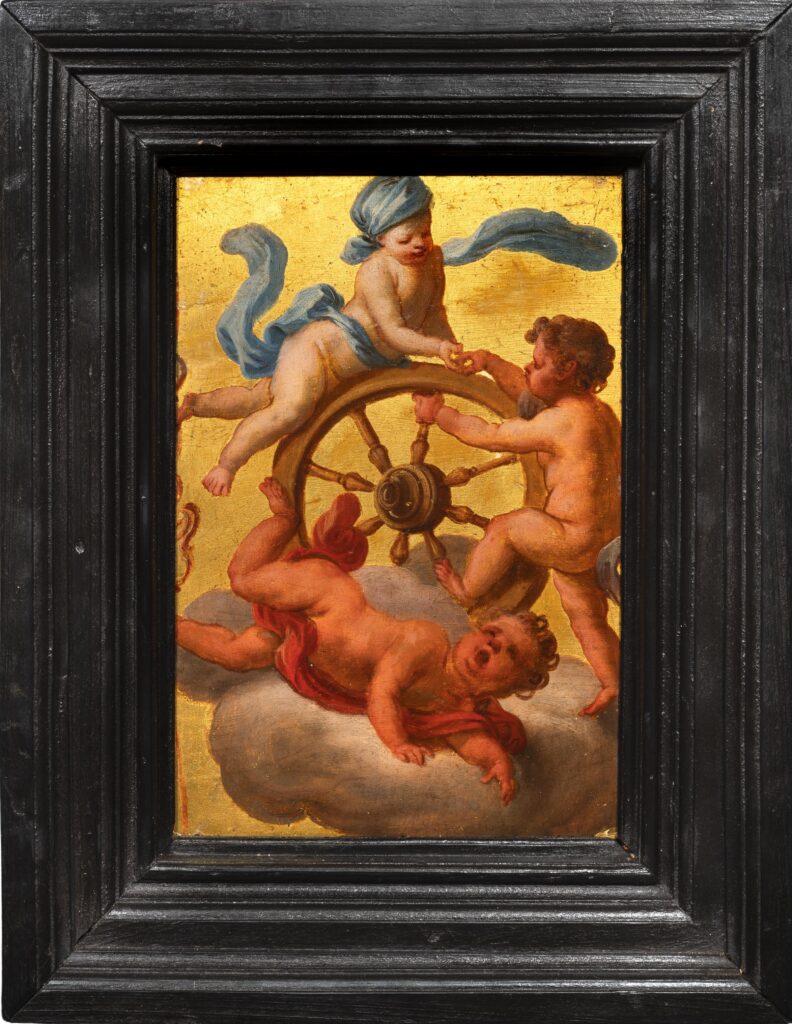
Particularly significant is the panel representing Fortune, interpreted through the Rota Fortunae: here the movement of the wheel determines the fate of the figures, with a triumphant putto at its summit and another cast to the ground in desperate lamentation, a reminder of the mutability of fortune. The cycle concludes with what appears to be an allegory of Architecture, identifiable by the large boards with architectural drawings supported by the small protagonists.
The panels therefore encapsulate the culture of the late Baroque in southern Italy, combining the softness of brushwork with the didactic function typical of great aristocratic residences of the 18th century. Fedele Fischetti’s career developed in the wake of Solimena, while also revealing the influence of fellow Neapolitan painters such as De Matteis and De Mura, and a growing interest in Batoni’s classicism. Such tendencies already emerge in his earliest dated works from the 1750s, which show the closest affinities with the present cycle; later in his career, however, his style gradually moved towards a more pronounced Neoclassical taste, as seen, for example, in the canvases executed for the Royal Palace in Madrid, more closely aligned with the innovations introduced there by Anton Raphael Mengs and Angelica Kauffmann.