


Vittorio Amedeo Cignaroli, attributed to
Turin, 1730 – 1800
Lakeside landscape
oil on canvas, 71×130
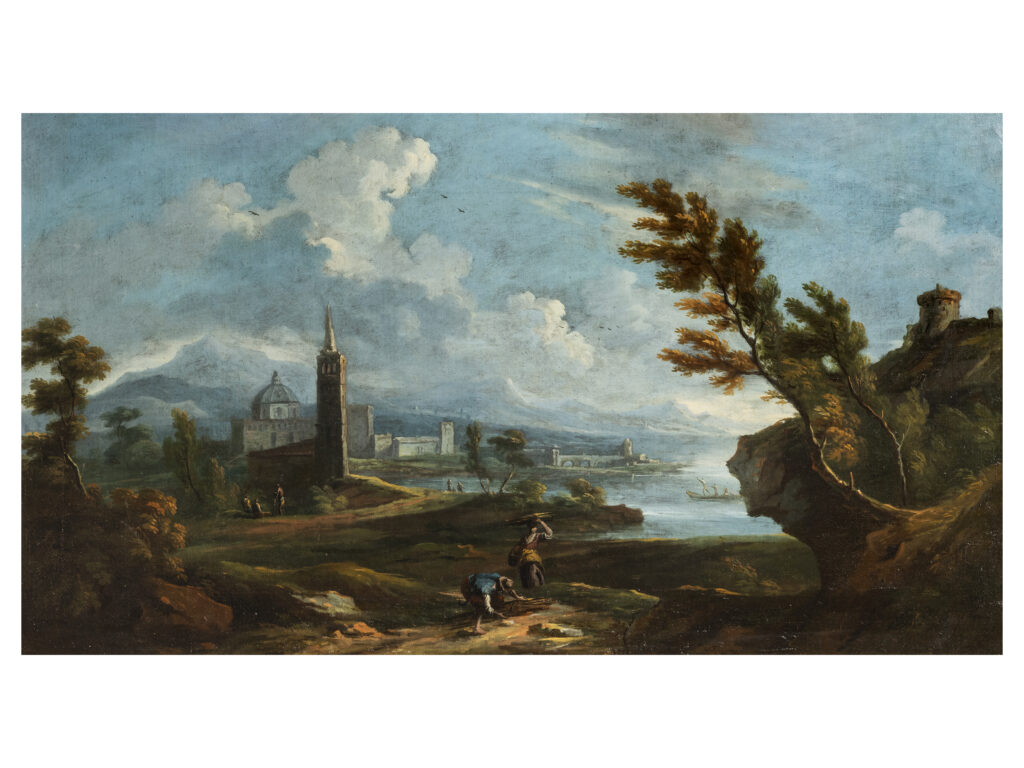
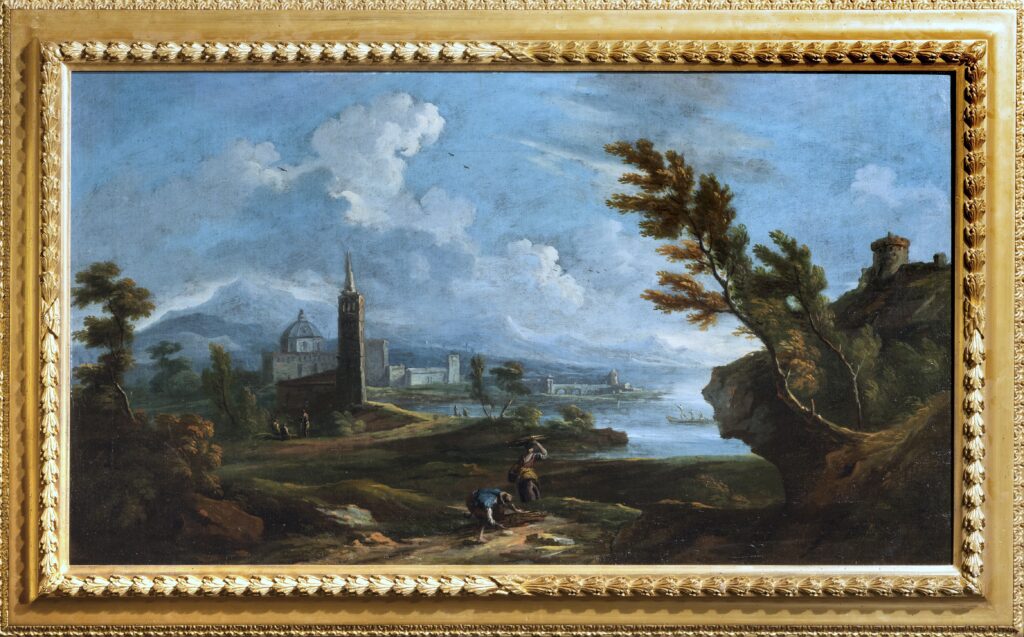
Surrounded by vegetation, timidly illuminated by the last glimmers of light after dusk, a lakeside landscape becomes the setting for the life of a small village. At its centre rise the silhouettes of a church and its bell tower, probably intended to emphasise the evening liturgical moment of Evensong. Around the village, several shepherds are depicted in their daily routines: one is returning home carrying bundles of firewood, another rests while gazing across the lake, while a third, in the distance, tries his hand at fishing after sunset.
The composition, constructed through a carefully orchestrated succession of spatial planes leading to the cool tones of the distant mountains, reflects the tradition of the invented landscape that emerged in the 17th century with Salvator Rosa (1615–1673) and the Franco-Italian painter Gaspard Dughet (1615–1675). The suspended atmosphere, the subtle gradations of tone centred on a masterful use of chiaroscuro, and the harmonious relationship between figures and nature recall the style of the Piedmontese painter Vittorio Amedeo Cignaroli, the foremost interpreter of the ideal landscape in the Savoy court painting of the second half of the 18th century.
Active mainly in Turin, Cignaroli headed a large and prolific workshop whose production ranged from idealised views to landscapes populated by animals and shepherds. Combining Roman models with Arcadian taste, he created compositions distinguished by their lyrical quality and balanced restraint.