


Paolo Anesi, attributed to
Rome, 1697 – 1773
Landscape with ruins
oil on canvas, cm. 78×66
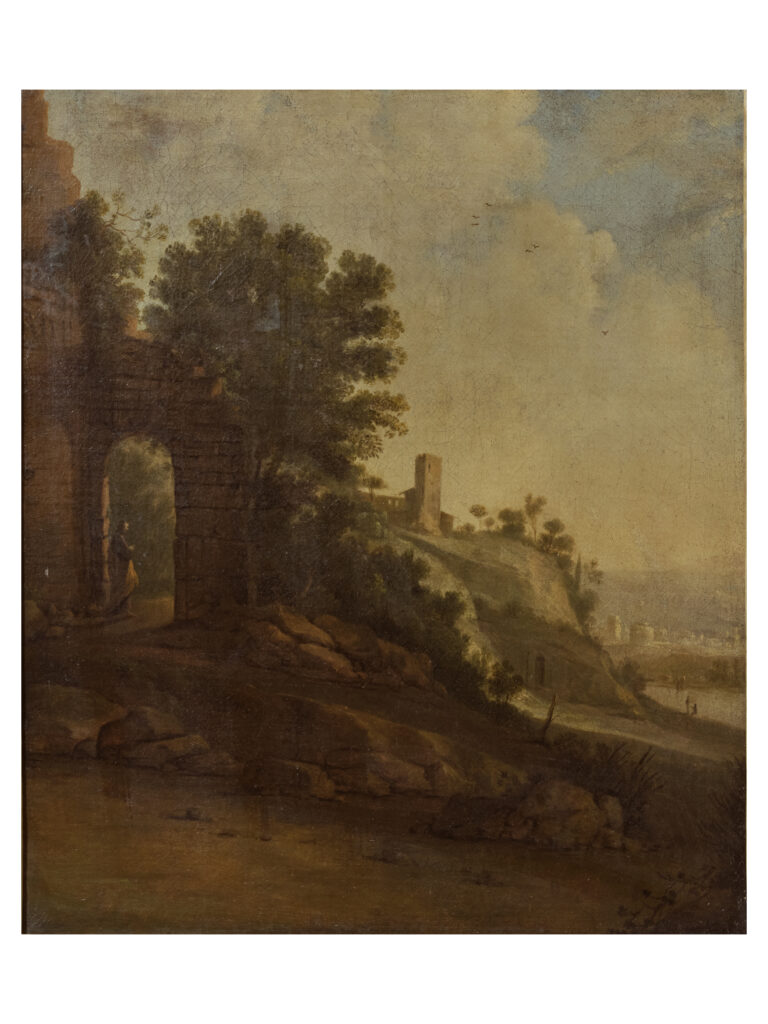
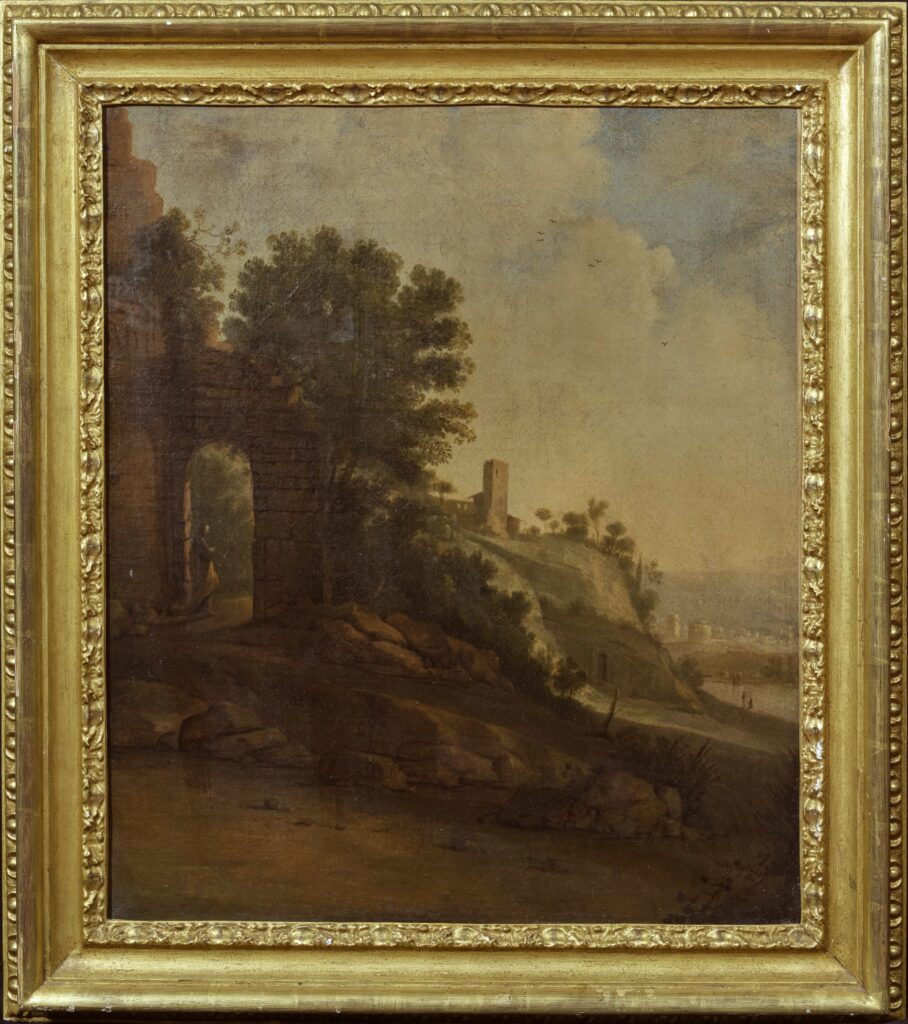
Attributed to the Roman artist Paolo Anesi, the painting portrays a landscape crafted according to the stylistic conventions of the 18th-century ideal landscape. In the foreground, a small figure is crossing a ruined arch, highlighting its monumental size. The composition then opens out onto a winding path that runs along a verdant hill, crowned at distance by a stone tower. In the background, the valley stretches away towards a luminous, hazy horizon, populated by small, barely noticeable human figures. These characters do not interrupt the monumentality of the scene but instead highlight its vastness and solemnity. The sky, vast and airy, dominates much of the canvas, casting a warm light that contributes to a rarefied, almost poetic atmosphere. Nature and architecture merge into a harmonious, timeless vision, where humanity is depicted as a modest presence in a world that evokes the eternity of the ancient past and the poetic beauty of the Roman countryside.
The compositional structure follows a diagonal line, guiding the viewer’s eye from the arch up to the top of the hill, emphasizing the sense of spatial depth. The warm, earthy tones of the foreground gradually dissolve into lighter, bluish shades, following a chromatic modulation reminiscent of 17th-century landscape painting, particularly the works of Gaspard Dughet and Salvator Rosa. However, in contrast to the dramatic intensity of these models, Anesi presents a more serene, Arcadian vision, which was more in vogue in the 18th century.
Similarly to other canvases from the same period, this work depicts an imagined landscape, populated with ruins and architectural fragments, designed to evoke the grandeur of antiquity and the allure of historical memory. This kind of works enjoyed great popularity in the 18th century, particularly among Grand Tour travellers, eager to take home images and sketches that captured the classical and picturesque essence of Rome and its surroundings.